
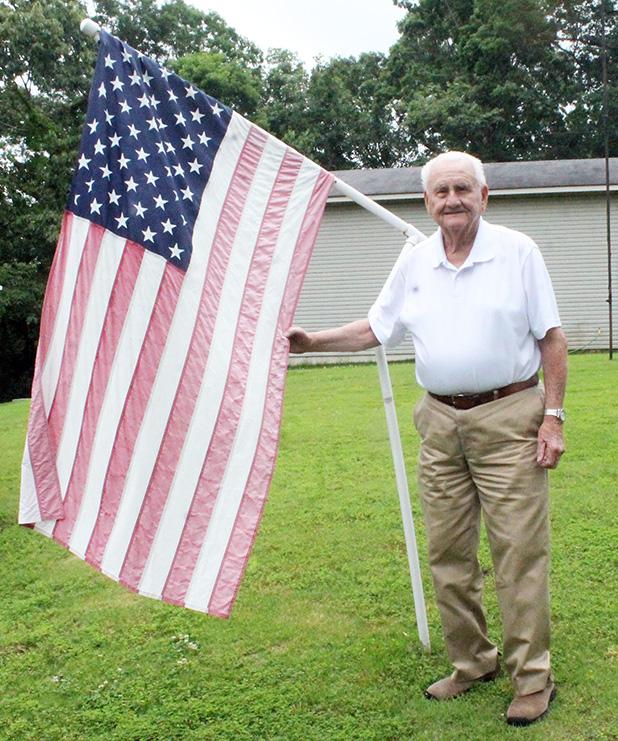
Return to Normandy: Eanes talks about service
“It was just hundreds of ships sunk out in the water. Bodies were out in the water that they hadn’t got cleaned up yet. Corpsmen tore all to pieces,” John Eanes, WWII veteran said, as he recalled the sights the day after the Normandy invasion.
The Invasion of Normandy, commonly referred to as D-Day, involved combat troops from allied forces of Canada, Free French forces, United Kingdom and the United States. Following the initial invasion, the Allied Forces were joined by troops from Poland, Belgium, Czechoslovakia, Greece and the Netherlands in the weeks following.
The invasion, which lasted from June 6, 1944, until the middle of July 1944, resulted in one million men having landed in Normandy by July 4 and over 100,000 casualties by July 24.
Known as the largest seaborne invasion in history, the first day of the invasion brought 156,000 Allied troops landing in Normandy with 4,413 deaths on the first day, along with countless ships lost.
“That was scary coming into all that and seeing all that,” Eanes said. “I guess everybody else was scared too.”
Eanes and his unit were sent into Normandy the day after the invasion.
“It was cool weather all the time there, right on the beach. We were there three or four days before going to Hedgerow country,” Eanes said.
The Hedgerows was terrain better suited than most places in the world for defensive action with the weapons in use at the time. The Norman Hedgerows date back to the Roman times and were mounds of earth made to keep cattle in specific boundaries or to mark certain boundaries. With the Hedgerows, the majority of them contained only one entry into the small field enclosed by the hedgerows.
To view more, please log in or subscribe to the digital edition.